Fluency score from short clips
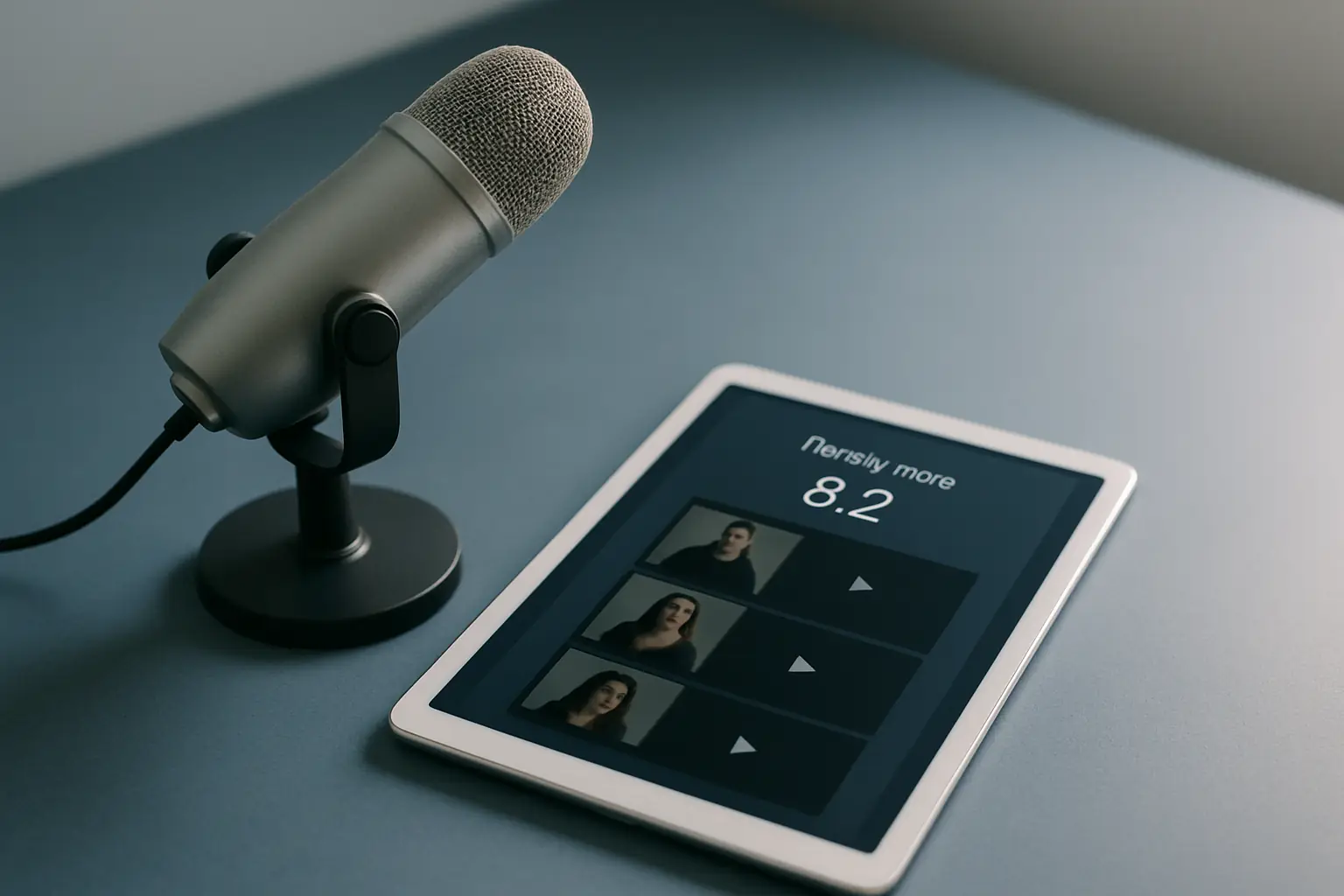
Fluency scores summarize pace, pauses, and clarity on short clips. They track direction across weeks, not worth of a single take after a bad sleep night. Use scores to pick one habit change, not to punish yourself. Daily speaking reps compound faster than weekend cramming. PracticeMe is waitlist-only; join on the landing page for App Store alerts. Record thirty-to-sixty-second clips even before the app ships so tutor time stays focused on nuance. PracticeMe is not a replacement for teachers, tutors, or certified exam preparation.
Use fluency scores weekly
- Record same prompt weekly Same question enables fair compare.
- Log one external factor Sleep, nerves, or noisy room.
- Pick one metric to improve Pause length or ending consonants.
- Ignore daily noise Trend lines beat single dots.
Scores reflect clip conditions
Background noise, mic distance, and emotional stress change scores without any grammar change. Compare like setups when you track progress.
Thirty second clips score differently than sixty second stories. Stay within one length band when reviewing trends.
Illness, caffeine jitters, and cold rooms change voice tension and scores. Note context on tough days so you do not misread a dip as regression. Compare scores only on similar prompt types and clip lengths.
If feedback flags fillers, count them on paper during playback. Awareness alone often cuts um and uh within days.
Tired nights and noisy cafes lower scores for reasons that are not language skill. Tag conditions beside the score so you compare like with like across the week.
Keep a tiny log: sleep hours, caffeine, and whether you practiced the prompt before. Conditions explain noise in fluency scores. Without that log, you will overreact to a bad Tuesday clip and under-credit a strong Friday that followed a full night of rest.
Translate scores into one drill
If pauses spike, practice linking common phrases aloud. If clarity drops, slow the first beat of each sentence then speed up gradually.
Celebrate upward weeks even when pronunciation is imperfect. Intelligible fast speech often beats slow perfect drills in real meetings.
If linking sounds weak, drill common collocations aloud: "kind of," "right now," "as far as." Small phrase drills move scores faster than random monologues. Pick one drill per week.
Alternate serious prompts with casual ones so your mouth learns both boardroom and hallway English.
If fillers spike, run a no-um retell tomorrow. If pace is choppy, shadow a model phrase. One drill per score keeps feedback actionable instead of demoralizing.
Track fluency on PracticeMe waitlistScores are not exam results
IELTS and TOEFL speaking use human or proprietary rubrics. App fluency scores approximate daily training, not official bands.
PracticeMe is not a replacement for certified test prep programs or teachers who know your target exam.
Official speaking tests use human raters or proprietary systems. Use app scores for daily training trends only. Exam prep still needs rubric-specific practice with qualified teachers.
When stuck, lower the bar to twenty seconds of clear speech. Streaks survive travel when the minimum is honest.
A fluency ring is a practice meter, not an IELTS or TOEFL score. Use it to pick tomorrow's drill. Official exams need their own timed practice. Mixing the two goals makes both feel worse than they are.
Questions
Why did my score drop on a good day?
Check noise, mic placement, and prompt difficulty before you doubt progress.
Should I share scores with tutors?
Yes. Clips plus scores give tutors fast context.