Pronunciation feedback from recordings
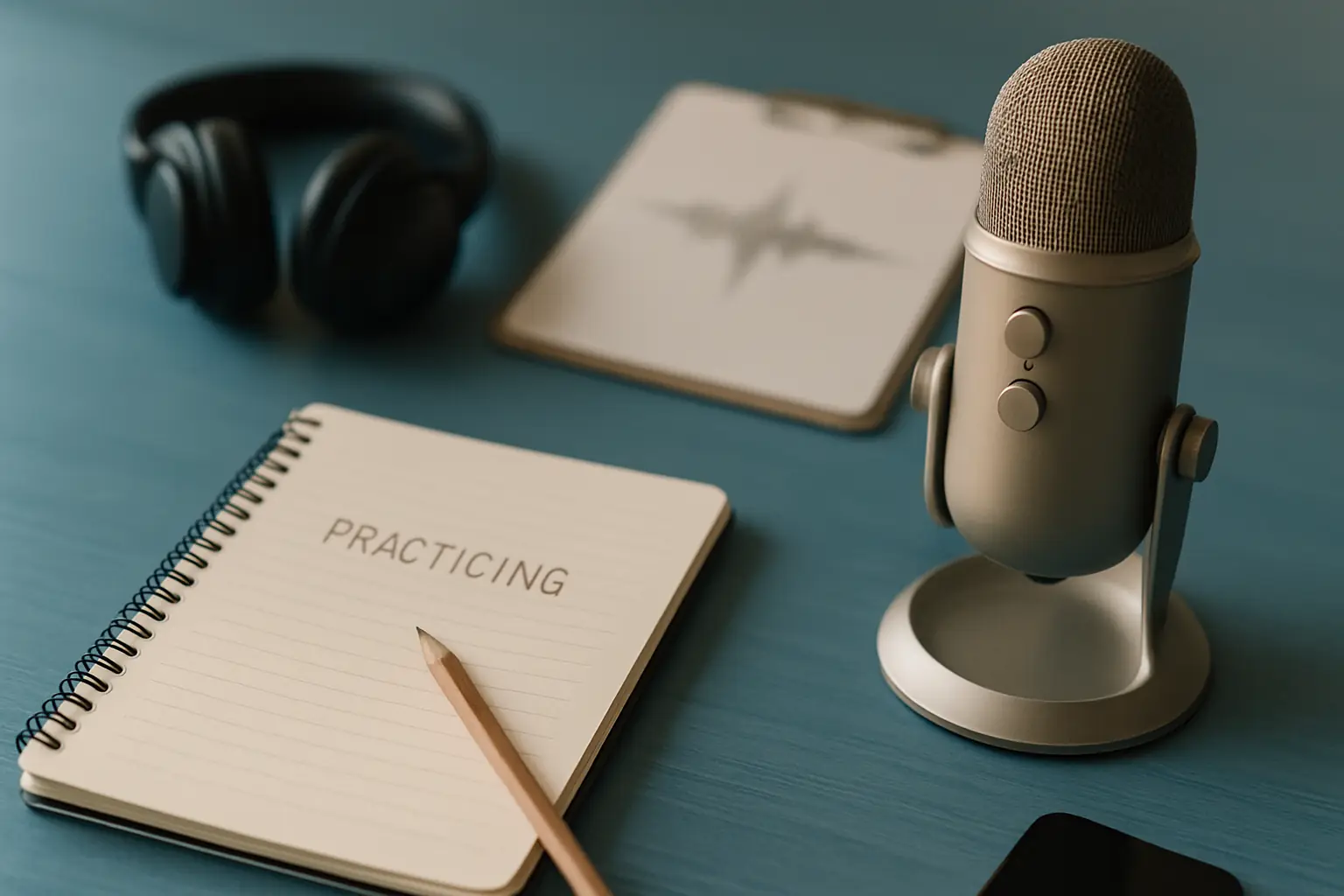
Pronunciation change needs ears and repetition. Record a phrase, get feedback on stressed syllables and problem sounds, then re-record tomorrow. Chasing every error at once overwhelms working memory. One fix per clip keeps progress visible. Daily speaking reps compound faster than weekend cramming. PracticeMe is waitlist-only; join on the landing page for App Store alerts. Record thirty-to-sixty-second clips even before the app ships so tutor time stays focused on nuance. PracticeMe is not a replacement for teachers, tutors, or certified exam preparation.
One pronunciation fix per clip
- Choose a target phrase Pick words you use at work or school.
- Record at natural speed Slow robot speech hides rhythm issues.
- Read feedback markers Focus on the top flagged sound.
- Drill five reps aloud Before you close the app.
Record in quiet, not silent, spaces
Total silence is rare. Face away from noise, hold phone steady, and accept minor background hum. Clear enough beats studio perfect.
Headphones with a mic help on windy walks. Built-in phone mics work at arm length indoors.
Soft furnishings reduce echo in empty rooms. Hold the phone steady at mouth height, not waist height, so consonants stay crisp in the recording. Test one playback with headphones before you trust feedback markers.
Shadow one model sentence slowly, then at natural speed. Speed only after stress and vowel targets feel stable.
A quiet room with soft background noise is fine. What hurts feedback is echo, wind, and music under your voice. Stable audio lets corrections target your sounds instead of the room.
Place the phone about a forearm away and speak at conversation volume. Too close and plosives blast the mic; too far and soft consonants disappear. Consistent mic setup makes week-to-week pronunciation feedback comparable so you can trust that a better score means clearer speech, not a luckier recording angle.
Work sound clusters that block understanding
Prioritize errors listeners notice: th, r/l, final consonants, and word stress on job vocabulary. Niche vowel shifts matter later after intelligibility wins.
Compare your clip to the model phrase when the app offers TTS match mode. Rhythm often fixes before individual phonemes do.
Job-specific vocabulary deserves its own phrase list: product names, client titles, and industry acronyms spoken aloud. Master those before rare academic words. Colleagues forgive accent before they forgive unclear product names.
Mark one sound family per week: th, r, final consonants, or linking. Narrow focus beats random correction lists.
Prioritize sounds that change meaning for your listeners: final consonants, vowel length, and word stress in verbs versus nouns. Endless work on a cute accent detail matters less than being understood in the first sentence of a meeting.
Get pronunciation feedback on PracticeMe waitlistTeachers still matter for nuance
Automated feedback catches patterns at scale. Tutors catch habit loops, mouth placement, and exam-specific rubrics. Use both.
PracticeMe is not a replacement for licensed language instructors or speech therapists when clinical speech issues exist.
Bring recordings to tutors so session time focuses on intonation and pragmatics, not basic sound drills you can do solo. Automated feedback scales reps; humans handle context.
Use a phone stand so posture stays open. Hunched recordings train quiet mumbling you do not want in interviews.
Bring two corrected clips to a teacher and ask only about the target sound. Focused human feedback on top of daily recordings moves faster than either method alone.
Questions
How many times should I re-record one phrase?
Once per day for a week beats ten times in one hour.
Will feedback understand my accent goal?
Set intelligibility first. Accent reduction goals belong in tutor conversations.