Home abs workout timer
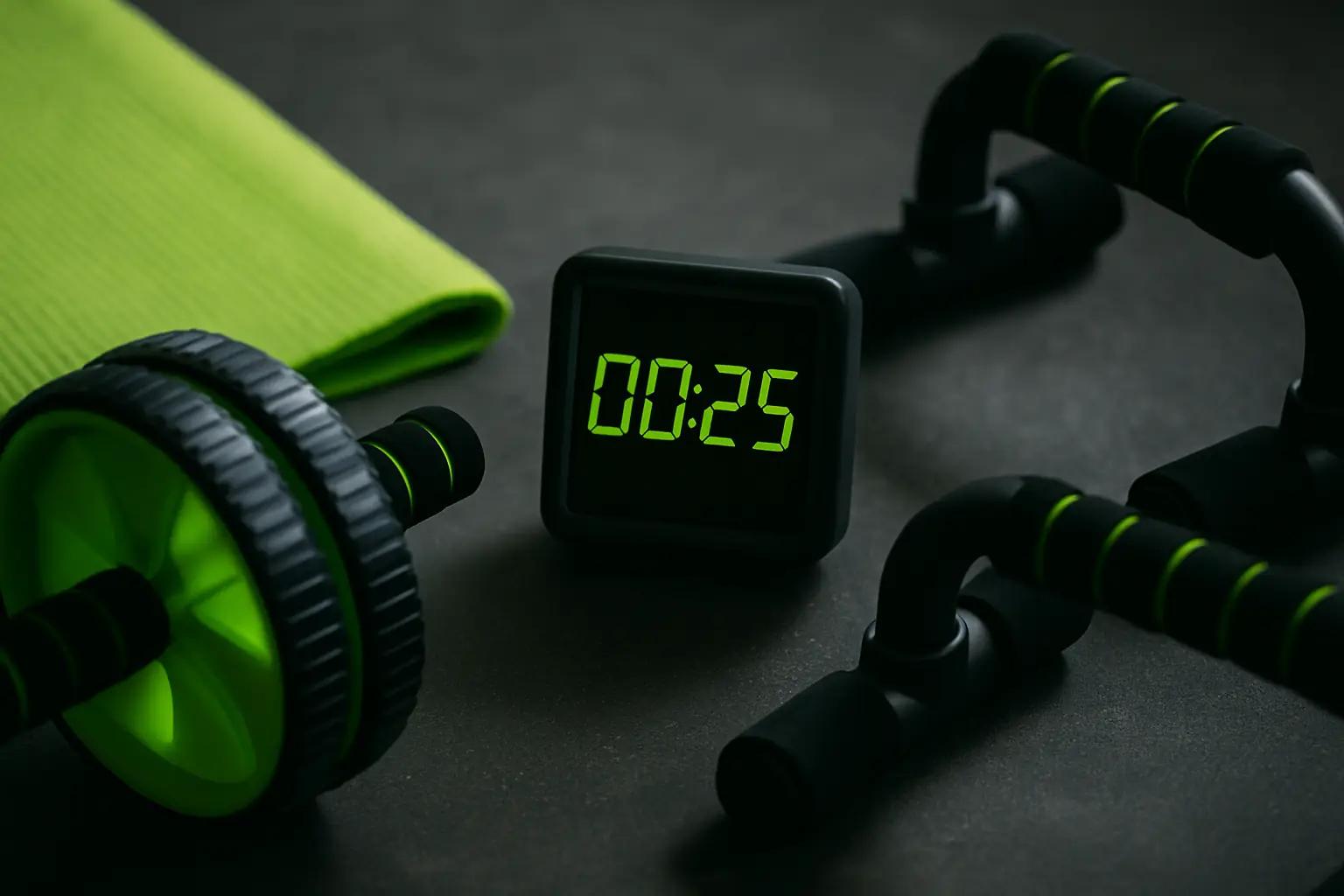
A home workout timer can keep intervals visible while you follow a routine you selected elsewhere. Abs Rank is a timer and session log; it does not select exercises or provide form coaching. You can configure reps, sets, and rest, run a 60-second work timer per set, and review session history and charts.
Use Abs Rank with your own routine
- Select your movementsChoose exercises from a routine or instructions you already trust; Abs Rank does not supply a circuit.
- Set the session controlsConfigure reps, sets, and rest from the available app options.
- Run the work timerEach work interval is 60 seconds. Pause, resume, or skip when needed.
- Review your sessionsUse the app history and charts to look back at recorded sessions.
Keep the routine separate from the timer
Write down or open the movement instructions you plan to follow before starting. Abs Rank tracks a timed session; it does not provide exercise names, demonstrations, or a circuit builder.
The browser tools on the Abs Rank site are standalone utilities. Their results do not sync to the iPhone app.
Know what each setting controls
The app lets you configure reps, sets, and rest. Its work interval is 60 seconds per set; it does not create custom work durations or recommend a schedule.
Pause, resume, and skip are session controls. They do not assess how a movement is performed.
Use history as a record
Session history and charts show recorded sessions for later review. They do not score exercise quality, measure physical changes, or generate a next workout.
Keep any exercise-selection or form questions with the source of your routine. Abs Rank is the timer and session log.
Review sessions in Abs RankQuestions
Does Abs Rank include a home circuit?
No. Choose exercises and instructions separately, then use the app to time and record a session.
Can I set a custom work duration?
The work timer runs for 60 seconds per set. Reps, sets, and rest are configurable.