Weekly mood chart patterns
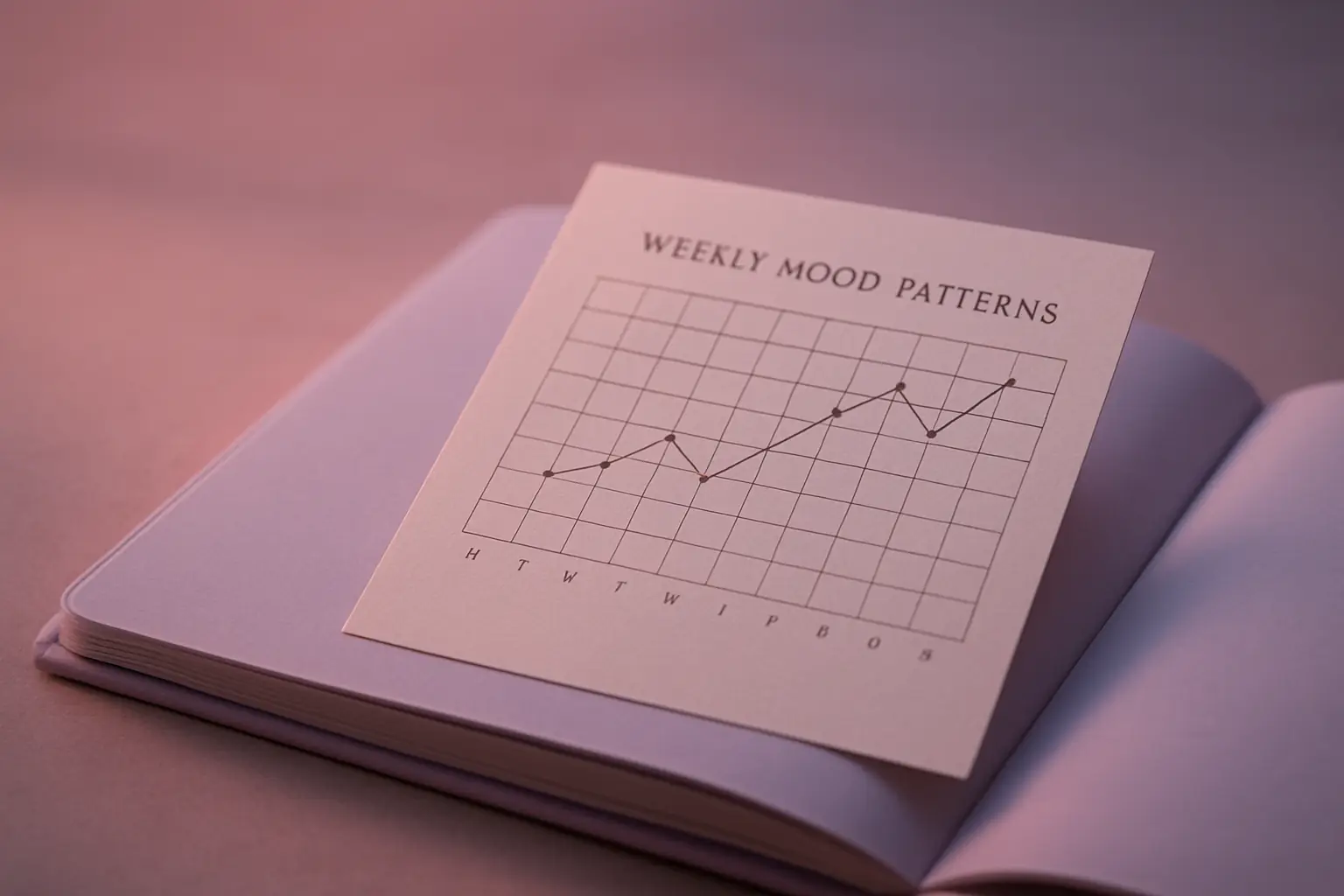
Daily moods jump around. Weekly charts smooth the line so you see Monday stress clusters or better weekends. The chart is a map for small life edits, not a grade on your mental health. Private journaling supports reflection between professional care visits. Flowy is waitlist-only; join on the landing page for release updates. Flowy is not therapy. If you are in crisis, contact local emergency services or visit https://www.iasp.info/suicidalthoughts/.
Review a weekly mood chart
- Log at least five days Sparse weeks still help over time.
- Open Sunday review Same weekly slot each time.
- Name one pattern Example: late meetings crush Tuesdays.
- Pick one tiny change Protect Tuesday dinner or walk.
Look for repeats, not single spikes
One bad Thursday means little. Four bad Thursdays means schedule or sleep deserves attention. Charts highlight repeats you forget when days blur.
Compare weeks to weeks, not to other people. Your baseline calm differs from someone else's high energy norm.
Seasonal affective dips, holiday stress, and project deadlines show as multi-week shapes on charts. Single-day spikes after bad news are normal grief or stress, not necessarily a pattern requiring intervention. Wait for repeats before major life changes based on one chart.
If entries feel performative, write messier on purpose. Neat prose is optional; honesty is the point.
One bad Thursday is weather. Three low Thursdays after late meetings is a pattern worth changing. Charts earn their keep when they point to schedule edits, not when they amplify a single rough night.
Print or screenshot the week and mark meetings, travel, and arguments beside the bars. Human annotation turns a pretty chart into a decision tool. Without that layer, you will blame yourself for chemistry that was really calendar load, then make changes that never touch the real cause.
Combine mood with sleep and workload notes
Overlay context tags when the app supports them. Low mood plus short sleep is a different fix than low mood plus isolation.
Celebrate upward weeks too. Pattern literacy includes noticing what went right so you can repeat it.
Export or screenshot charts before therapy appointments if your clinician welcomes them. A four-week view communicates more than trying to remember daily moods from memory alone. Bring one pattern question to session, not the entire archive.
Separate venting from problem-solving. First dump, then one actionable line. Mixing both often stalls both.
A low mood bar next to four short-sleep nights points to rest, not a personality flaw. Charts without sleep and workload context invite wrong fixes. Add two quick tags so patterns suggest practical changes you can actually try next week.
See mood charts on the Flowy waitlistEscalate when patterns stay dark
Charts that show sustained low mood or rising anxiety deserve professional eyes. Journals surface the signal; therapists and doctors respond to it.
Flowy is not therapy. If you are in crisis, contact local emergency services or find help at https://www.iasp.info/suicidalthoughts/.
Sustained low mood charts deserve professional attention. Journals surface the signal; therapists and doctors respond. Crisis resources including https://www.iasp.info/suicidalthoughts/ remain available if you feel unsafe. Charts are not treatment.
Travel days can use voice notes transcribed later if typing is hard. The streak cares about check-in, not perfect prose.
If low mood persists across weeks, talk to a qualified professional. A journal can show the pattern; it cannot treat clinical depression. Use crisis resources immediately if you feel unsafe.
Questions
Do I need perfect daily logs for charts?
No. Partial weeks still trend over months.
Can AI summarize my weekly mood?
Some apps offer summaries. Treat them as prompts for reflection, not diagnoses.