Muscle score from progress photos
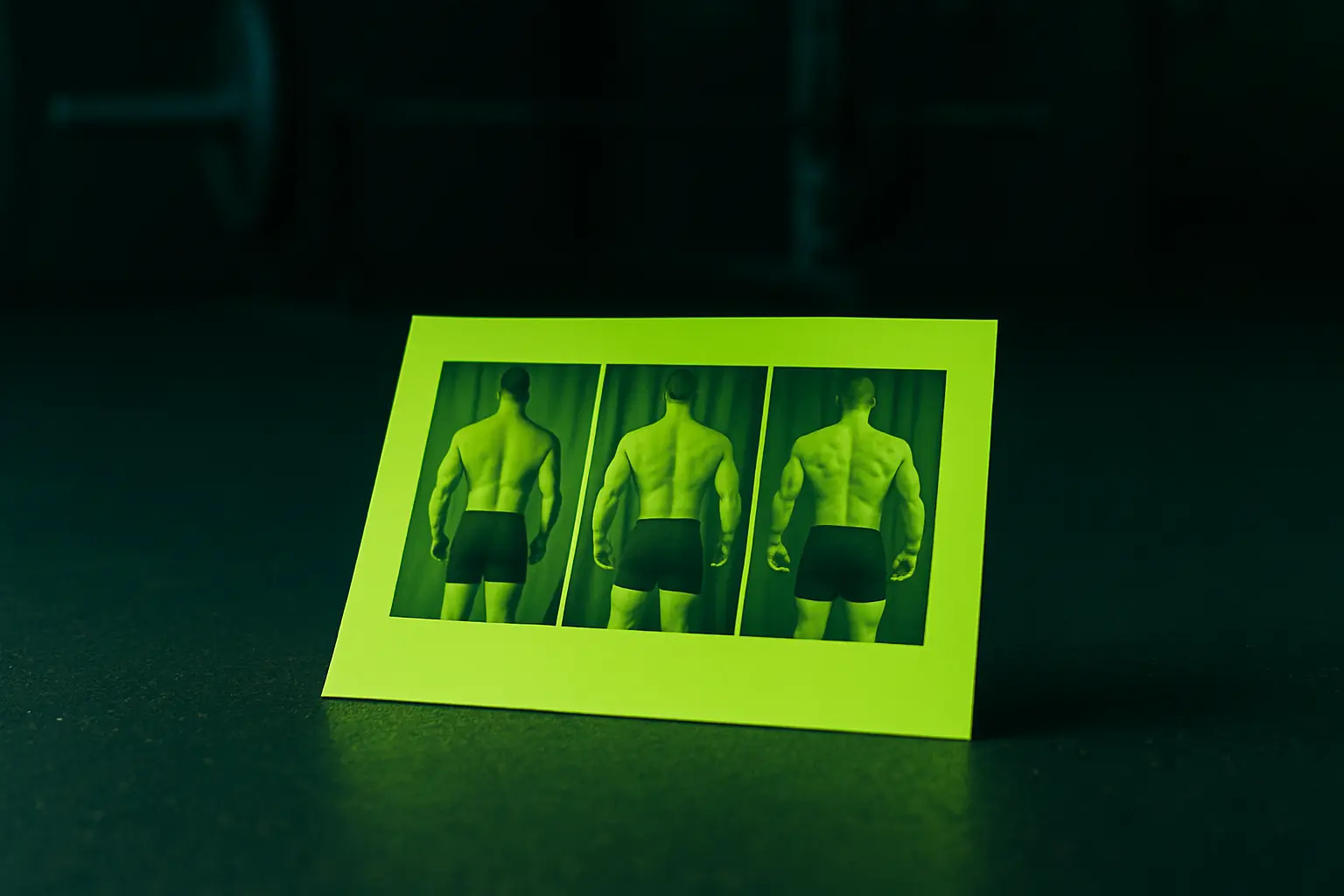
Bulks confuse the scale. Weight rises from glycogen, food volume, and muscle together. Muscle score from consistent photos helps you ask whether shoulders, back, and legs look fuller while the midsection stays inside your acceptable range. Photo timelines work when pose and lighting stay boring. GainFrame is waitlist-only; join on the landing page for download news. Visual estimates are educational wellness tools, not DEXA replacements or medical advice.
Track muscle score visually
- Shoot upper and lower body Front, side, and optional back.
- Keep bulk lighting stable Gym pump photos are fine if every week uses the same timing.
- Compare monthly Muscle visual change is slower than fat loss.
- Pair with strength logs Photos plus reps tell a fuller story.
Muscle score is a direction marker
Think of muscle score as a trend arrow, not a lab value. It aggregates how full muscle groups look across your photo set. Useful when you decide whether to keep a bulk surplus or trim it back.
Genetics decide where you gain first. Photos show your pattern: maybe legs grow before chest. That insight beats comparing yourself to someone else's timeline.
Beginners often see quick neural gains in strength before photos change. Intermediate lifters may need longer photo horizons. Compare the same season year over year to account for bulk and cut cycles rather than expecting linear visual growth every month. Muscle score summarizes direction, not grams of tissue.
Front lighting that is too dramatic creates fake shadows under the abs. Soft even light is boring and more honest.
Treat a muscle score like a weather report for training: useful for trends, useless for identity. If the score dips during a hard cut while lifts hold, you may be flat from food and sleep, not suddenly losing months of muscle overnight.
Avoid pump versus flat mismatches
Post-workout shots every week can look like faster progress than morning flats. Pick one standard. Many people shoot non-pumped morning photos for honesty and add occasional gym shots as bonus data.
Carb intake changes fullness. Note high-carb days on the timeline so a sudden fuller look is not mistaken for new muscle overnight.
If you train evenings and shoot mornings, expect flat photos despite good sessions. Pick one time relationship and keep it. Hydration from creatine or carb loading also changes muscle fullness without new tissue. Note supplement changes on the timeline.
If a scan estimate jumps wildly, check pose first before changing diet. Measurement noise is common with phone photos.
See muscle trends on the GainFrame waitlistUse trends to adjust training and food
If muscle score flatlines for two mesocycles while strength stalls, food or sleep may lag before you blame the program. Photos nudge that conversation with your coach early.
GainFrame is not medical advice. Muscle score estimates from photos are wellness metrics, not clinical lean mass measurements.
When photos and strength climb together during a bulk, surplus is likely productive. When photos soften quickly while scale rises, trim surplus slightly before chasing more mass. Visual guardrails prevent dirty bulk regret. Small food trims beat program overhauls when photos warn early.
Bulk phases should still show weekly photos. Skipping shots until you "look ready" hides early fat gain you could have slowed.
When scores drift down for three matched weeks while strength falls, add protein or pull back cardio before adding random supplements. Photo trends should change program variables you control, not panic shopping.
Questions
Does muscle score replace circumference measurements?
It complements them. Tape measures on arms and thighs still help.
Will short bulk phases show in photos?
Usually not clearly under four weeks. Stay patient with visual data.